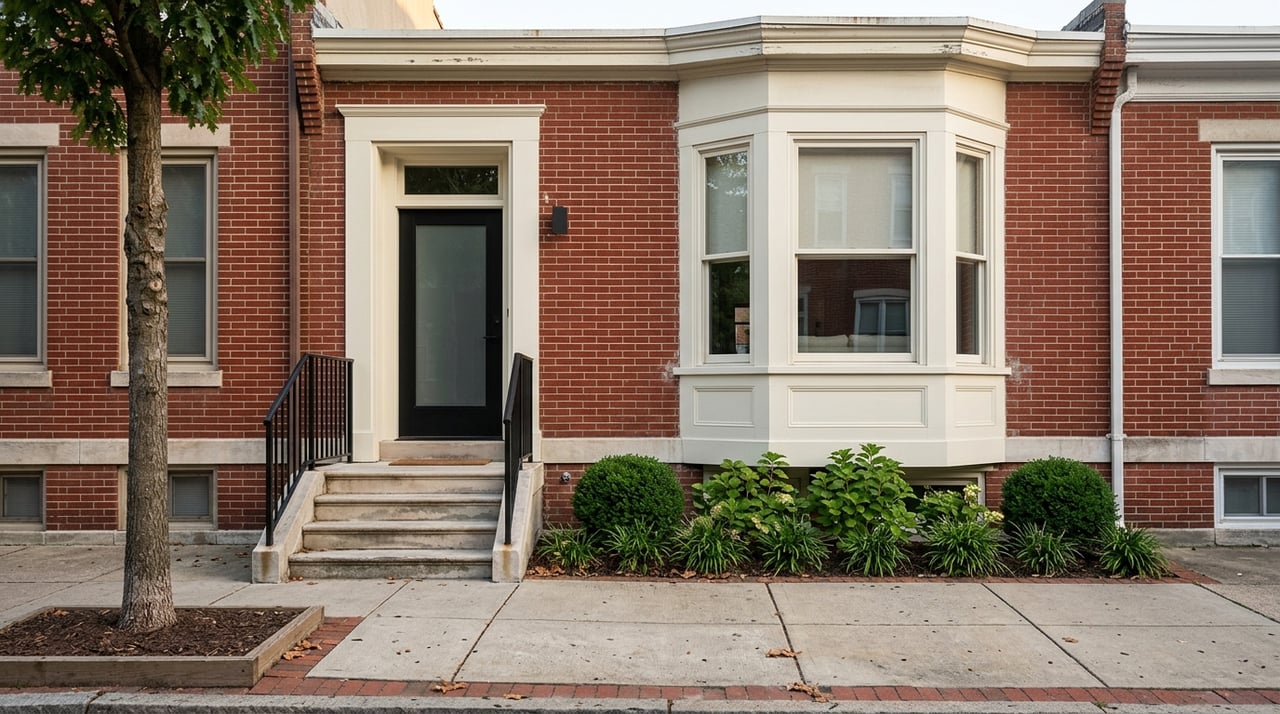
Arlington VA DC Commute Housing: Best Areas to Buy
June 18, 2026
June 18, 2026
Need to get into DC without making your daily routine revolve around traffic? Arlington is one of the strongest places in the region to buy when commute convenience is a top priority, but the right fit depends on how you want to travel and what type of home you want. If you are weighing Metro access against more space, or deciding whether a bus- or bike-friendly area could work just as well, this guide will help you think through the tradeoffs clearly. Let’s dive in.
Arlington has a planning pattern that makes commute-friendly home searches more predictable than in many nearby markets. The county concentrates higher-density development along transportation corridors, and high-density areas are generally located within one-quarter mile of Metro entrances.
For you as a buyer, that usually means the easiest DC commute options cluster in a few key areas. The Rosslyn-Ballston corridor and the Crystal City-Pentagon City area stand out for rail access, while some neighborhoods farther south and west are more bus- and trail-connected.
The biggest tradeoff is usually simple. If you want to be closest to Metro, you will often see more condos, apartments, and mixed-use buildings. If you are willing to move farther from the station core, you are more likely to find townhomes, garden-style communities, and single-family homes.
If rail access is your top priority, Arlington gives you several strong options. The key is understanding that each station area has its own housing mix and feel, even when commute convenience is a shared strength.
Rosslyn is one of the most direct Arlington-to-DC connections. It sits just across the Key Bridge from Washington, DC, and it is the first Virginia stop for Orange, Silver, and Blue Line trains.
From a housing perspective, Rosslyn is one of Arlington’s most urbanized station areas. You will find a dense mix of high-rise apartments, condos, smaller residential buildings, and some newer luxury townhouses, with more than 6,000 residences within a 10-minute walk of Metro.
If your goal is to keep your commute simple and stay close to the core of DC, Rosslyn deserves a close look. It is especially relevant if you want a low-car or no-car lifestyle and are comfortable with a more urban housing environment.
The Rosslyn-Ballston corridor is Arlington’s main Orange and Silver Line spine. For many buyers, this stretch offers the best balance of commute convenience, housing variety, and neighborhood-to-neighborhood choice.
Courthouse is a mixed residential, office, and retail center around Metro. Clarendon, Virginia Square-GMU, and Ballston-MU continue that rail-connected pattern, with housing and activity centered around each station.
Ballston is a major transportation hub with office, retail, and residential uses that taper toward lower-density residential areas. Virginia Square includes larger buildings and the George Mason University Arlington campus, while the overall corridor gives you access to condos, apartments, mixed-use buildings, and some townhome inventory.
If you want to compare options without leaving the Orange and Silver Line network, this corridor gives you a lot to work with. It is one of the best places to start if your commute matters every day and your housing priorities are still taking shape.
East Falls Church can be a smart option if you want easier rail access than many outer suburbs but prefer a less dense setting than the central corridor. It is still part of Arlington’s rail-connected map, but its housing pattern shifts toward lower density.
Here, you are more likely to see single-family homes and townhouses, along with some commercial and industrial uses near Lee Highway, Washington Boulevard, and I-66. That makes East Falls Church useful for buyers who want a more traditional residential setup while keeping Metro in the picture.
This is a good example of Arlington’s core commute tradeoff in action. You may gain more space and a different housing form, but you are usually moving away from the highest-density, station-core environment.
On the south side of the county, Pentagon City and Crystal City are two of Arlington’s strongest transit-oriented areas. Both are concentrated around Blue and Yellow Line stations and are closely tied to daily commuting patterns into DC.
Pentagon City includes a mix of housing types among commercial buildings and is also known for shopping and dining. Crystal City is described as a walkable, transit-oriented neighborhood with residential and commercial buildings close to Metro.
If you want strong rail access but prefer to focus your search south of Rosslyn-Ballston, these two areas should be high on your list. They also make sense if you want a more car-light routine with multiple transportation options nearby.
Not every easy Arlington commute starts with living next to a Metro entrance. Arlington Transit, or ART, supplements Metrobus and connects neighborhoods to Metrorail and VRE, which opens up more buying options.
Current ART routes that matter for DC-bound buyers include connections from Columbia Pike to Ballston, Courthouse, Rosslyn, or Pentagon City. There are also routes linking Ballston to Pentagon or East Falls Church, East Falls Church to Rosslyn, and south Arlington areas like Shirlington, Green Valley, and Douglas Park to Pentagon City and the Pentagon.
Columbia Pike is one of the county’s most important bus-oriented corridors. County materials describe it as a corridor with a significant supply of multifamily housing and a long-range goal of preserving affordability.
If you are open to a commute that depends more on bus service than rail, Columbia Pike can widen your search substantially. Housing here tends to include multifamily communities and apartment-centered options rather than Metro-core high-rise living.
Shirlington is another practical area for buyers who care about access but do not need to be right on top of Metro. The county describes it as having easy access to DC, Crystal City, the Pentagon, and the airport via trails and bus service from Shirlington Bus Station.
Nearby areas such as Douglas Park and Green Valley also fit this more bus-oriented pattern. Housing in these parts of Arlington tends to include multifamily homes, garden-style apartment communities, townhomes, and affordability-focused developments.
For some buyers, this can be the sweet spot. You may not get the same station-front convenience as Rosslyn or Ballston, but you can often expand your housing choices and still maintain a workable commute strategy.
If you want your commute to include biking or walking, Arlington has real infrastructure to support that choice. The county has nearly 49 miles of paved, multi-use trails.
For DC commuting, the most important routes include the Custis Trail, the Mount Vernon Trail, the Four Mile Run Trail, and the Arlington Memorial Trail connection plan. These routes help link key Arlington areas such as Rosslyn-Ballston, Crystal City-Pentagon City, and Columbia Pike with broader bike and pedestrian access toward DC.
Rosslyn has seen street and trail upgrades including wider sidewalks, an on-street bike lane, and a widened Custis Trail. Crystal City also has a bike-network plan that calls for protected or buffered lanes.
If you are trying to reduce car dependence, these details matter. In the right Arlington neighborhood, biking can be part of your everyday commute mix rather than just a weekend benefit.
Even if your main goal is an easy DC commute, you may still want the option to drive part of the time. Arlington’s major road network includes I-66, I-395, U.S. Route 50, George Washington Memorial Parkway, U.S. Route 1, and U.S. Route 29.
Ballston has direct access to I-66 and Glebe Road. East Falls Church is bisected by I-66, and the Pentagon City-Crystal City area sits within the broader Route 1 and Route 110 transportation zone.
That does not mean driving will always be your easiest choice, but it does matter when you are evaluating flexibility. For some buyers, the best answer is not one commute mode. It is having two or three viable ones.
When you buy in Arlington, commute convenience and housing form are closely tied together. Understanding that early can save you time and help you make smarter tradeoffs.
Here is a simple way to think about it:
This is where a clear buying strategy matters. The right home is not just about price or square footage. It is about choosing the commute pattern you can realistically live with over time.
If you are buying in Arlington for an easier DC commute, start by ranking your priorities in order. Decide whether rail access, housing type, space, budget fit, or car-light living matters most.
From there, compare a few station-based and bus-based areas side by side. You may find that a condo near Rosslyn gives you the shortest trip, while a townhome near East Falls Church or a bus-connected option near Columbia Pike gives you a better overall lifestyle fit.
This is also where a finance-minded approach helps. Arlington offers strong commute advantages, but the best decision usually comes from balancing time, housing form, and long-term value rather than chasing only the shortest trip on paper.
If you want help sorting through Arlington’s commute-driven tradeoffs and matching them to the right home search, Marshall Carey Realty Group can help you build a smart, low-stress plan.
Stay up to date on the latest real estate trends.
Get assistance in determining current property value, crafting a competitive offer, writing and negotiating a contract, and much more. Contact me today.