Washington DC Rowhouse Living: What Daily Life Feels Like
June 25, 2026
June 25, 2026
Curious what daily life in a DC rowhouse area actually feels like? If you are trying to decide between a condo, a detached home, or a classic Washington rowhouse, that question matters more than square footage alone. In Washington, DC, rowhouse living is tied to walkable blocks, historic character, and a very specific urban rhythm. This guide will help you picture the lifestyle, the housing pattern, and the practical tradeoffs so you can decide whether it fits how you want to live. Let’s dive in.
Rowhouses are a major part of Washington’s housing fabric. According to the DC Office of Planning, the District’s housing stock is mostly made up of multi-unit buildings, while only 11% of homes are single-family detached. In Wards 4, 5, 7, and 8, row houses and smaller apartment buildings make up about 50% to 75% of homes.
That helps explain why rowhouse neighborhoods feel so central to the DC experience. They are not a niche housing type here. They are one of the defining ways people live in the city.
The Census Bureau defines row houses and townhouses as one-unit attached homes separated by walls from ground to roof. In practical terms, that usually means you get your own front door and a more house-like feel than a condo, while still living in a denser, more connected part of the city.
Many DC rowhouses were built in the 19th century and follow a narrow-lot pattern. An official planning memo describing West Georgetown notes lot widths commonly around 18 to 20 feet, with lot depths often ranging from 90 to 140 feet. Homes are typically 2 to 3 stories tall and directly attached to neighboring homes.
For you, that often means living across multiple levels instead of spreading out across one wide floor plan. Bedrooms may be upstairs, living space may center on the main level, and basements can add useful bonus space. The layout can feel charming and efficient, but it also means stairs are part of daily life.
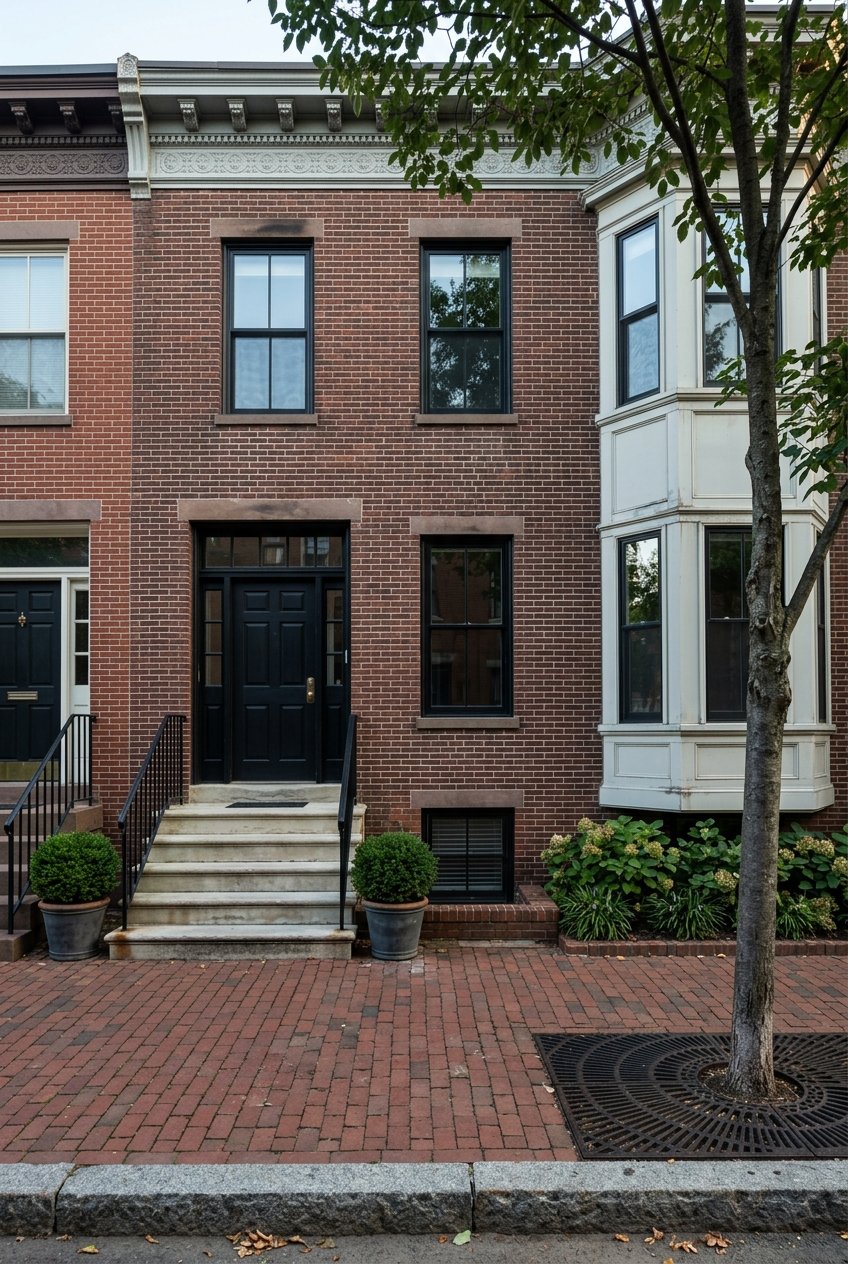
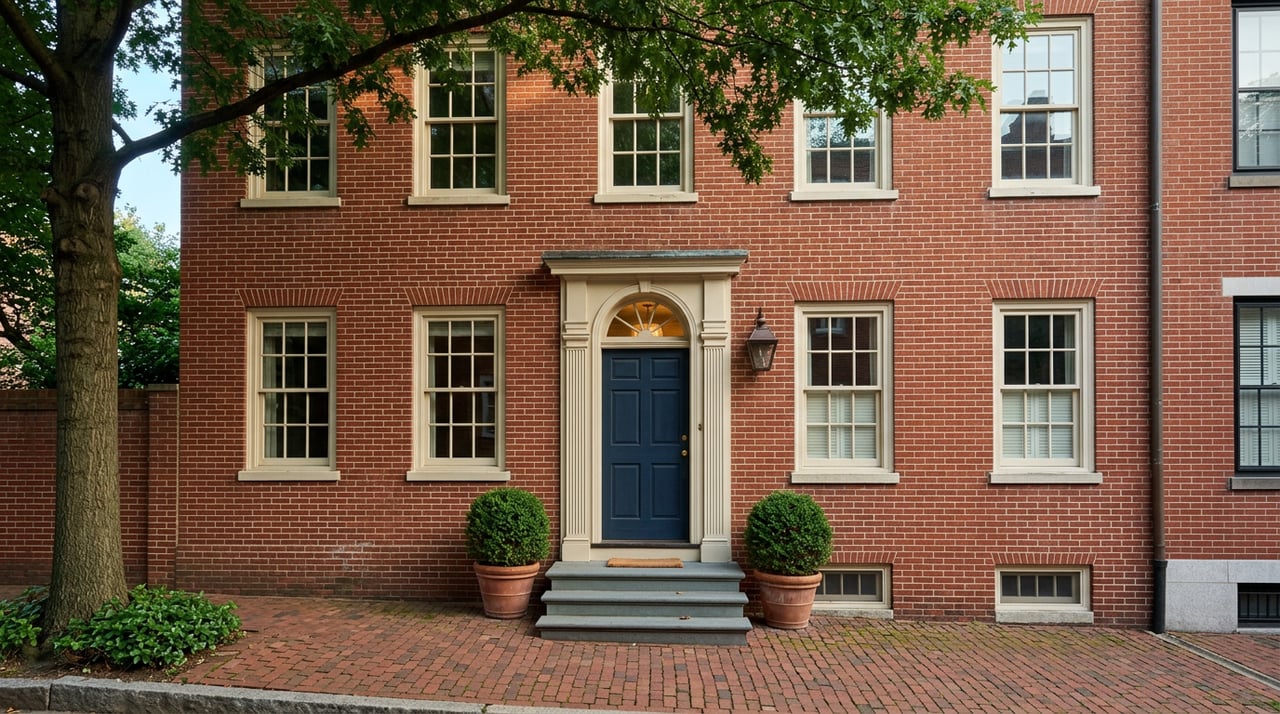
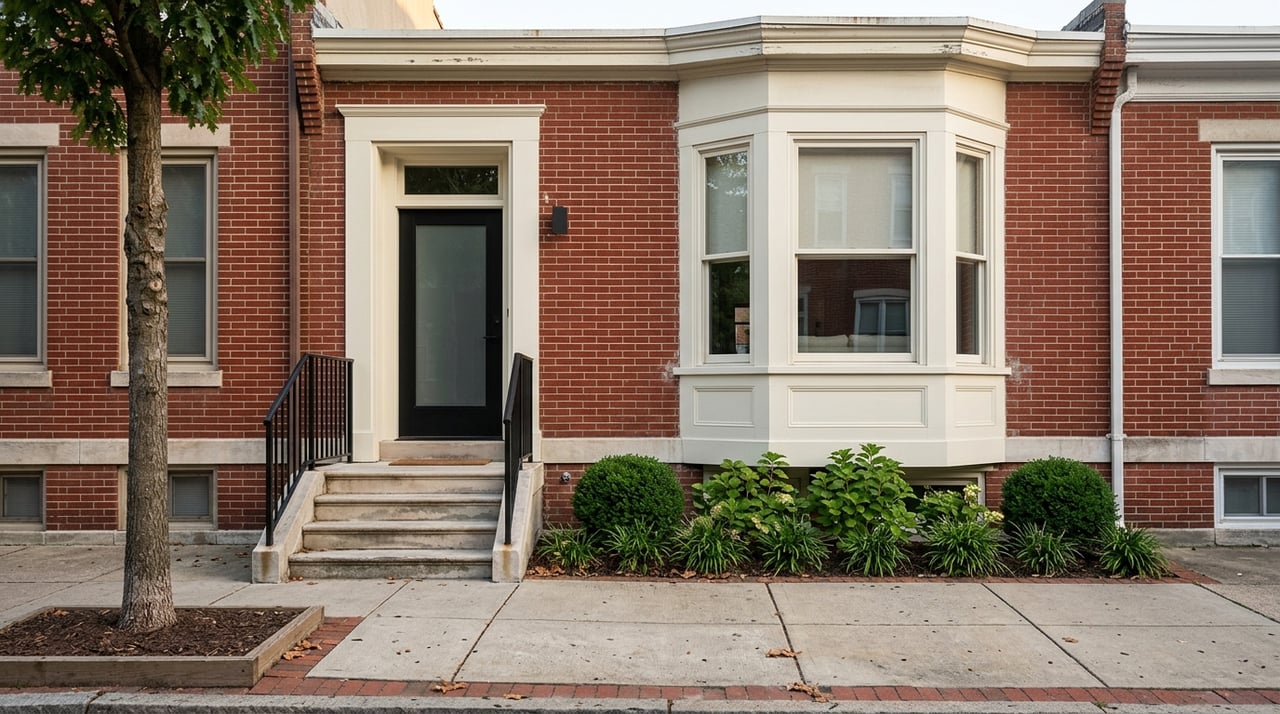
A lot of older DC rowhouses have raised basements, often called English basements, along with stoops or steps at the front. Instead of deep front porches and broad front lawns, the front entry tends to connect more directly to the sidewalk and street.
That creates a more street-oriented feel. Your stoop, front steps, and the look of the block become part of everyday living. In many rowhouse areas, the exterior rhythm of homes lined up along the street is a big part of what makes the neighborhood feel distinctly Washington.
If you are picturing a large front yard and a driveway, that is usually not the rowhouse setup in DC. The city’s landscape guidance notes that rear yards have historically been more utilitarian, often with garages opening to an alley. In historic rowhouse areas, front-yard driveways are generally not allowed, and parking is usually placed in the rear yard beside an alley.
That means outdoor living often happens behind the home, not in front of it. Patios, decks, small gardens, and parking spaces are more commonly part of the rear yard setup. If private outdoor space matters to you, the size, access, and usability of the rear yard should be a key part of your search.
One reason buyers are drawn to rowhouses is the balance they offer. You usually get a private entrance, no upstairs or downstairs neighbors in the same way you would in many condos, and a more self-contained living experience.
At the same time, you are still in an attached home. You share side walls with neighbors, and the spacing between homes is naturally tighter than it would be in a detached-house setting. So the lifestyle often feels more private than condo living, but less buffered than a single-family home.
Many of DC’s rowhouse areas are closely tied to neighborhood commercial corridors. The Office of Planning describes Ward 1 neighborhoods such as Columbia Heights, Adams Morgan, Mount Pleasant, Pleasant Plains, LeDroit Park, and parts of Shaw as rowhouse-dominated. It also describes Capitol Hill in Ward 6 as a tight-knit community with local resources such as Eastern Market.
Ward 3 areas like Woodley Park and Cleveland Park are described as patterns of local shops and restaurants surrounded by apartment buildings and townhouses. In other words, rowhouse living in DC often means you are choosing a block-by-block urban lifestyle where daily errands, dining, and neighborhood routines may happen close to home.
In a rowhouse area, your experience is shaped not just by the home, but by the block itself. Because the homes are attached and close to the street, details like stoops, retaining walls, front landscaping, and alley access can have a big impact on how a property feels.
This is one reason buyers often respond strongly to one block and not another, even within the same general area. The housing form makes the immediate surroundings more noticeable in your day-to-day experience.
DC does not have official neighborhood boundaries, so many neighborhood names are planning shorthand rather than legal map lines. Still, the city’s rowhouse pattern is easy to spot in many older and denser parts of Washington.
The Office of Planning says Columbia Heights, Adams Morgan, Mount Pleasant, Pleasant Plains, LeDroit Park, and portions of Shaw are dominated by row houses. These areas are often associated with dense urban living and strong connections to commercial corridors.
In Ward 4, the Office of Planning highlights neighborhoods such as Petworth, Brightwood, Fort Totten, Lamond-Riggs, and the 16th Street corridor area. Petworth is noted for its townhouses, while Brightwood and nearby neighborhoods include townhouses alongside other housing types.
Ward 5 includes Brookland, Eckington, Bloomingdale, Ivy City, Trinidad, Carver-Langston, and Fort Lincoln. The Office of Planning describes Eckington and Bloomingdale as typical townhouse neighborhoods, while Ivy City, Trinidad, and Carver-Langston are noted for porch-front townhouses.
Capitol Hill is one of the city’s best-known townhouse centers. The Ward 6 Heritage Guide also describes Hill East as a neighborhood of rowhouses, schools, churches, and social centers. Other parts of Ward 6, including areas near H Street and Near Northeast, also feature rowhouse patterns.
Ward 3 is often associated with apartment buildings and detached homes, but there are townhouse pockets around commercial cores. The Office of Planning points to places like Woodley Park, Cleveland Park, Forest Hills, and Chevy Chase as areas organized around local shops and restaurants with nearby apartment buildings and townhouses.
This is one of the biggest practical points to understand before buying a rowhouse in DC. The city has 70 historic districts, and the Historic Preservation Office says the DC Inventory includes about 23,600 buildings. Because many rowhouse neighborhoods fall within historic districts, exterior changes may require an extra level of review.
The Historic Preservation Office says historic review is an added step within the normal permit process. The Historic Preservation Review Board handles matters such as demolitions, new construction, front and side additions, large rear additions, roof additions or roof decks visible from a street, and new curb cuts or parking pads in front or side yards.
If you are looking in Georgetown, the process can be more specific still. Most exterior work there goes through the U.S. Commission of Fine Arts and the Old Georgetown Board.
If you think you may want to expand, rework the exterior, or add different access in the future, that should be part of your buying decision from day one. Basement entrances, rear additions, roof changes, parking arrangements, and visibility from the street can all affect what may be possible.
The city’s basement guidance says new basement entrances should be visually discreet and subordinate to the main entrance. That may sound like a small design detail, but it shows how closely the city treats exterior changes in many rowhouse settings.
When you tour a DC rowhouse, it helps to look past the basic bedroom and bathroom count. The day-to-day experience is often shaped by features that do not stand out on a listing sheet right away.
Here are a few practical things to pay attention to:
If you are comparing a rowhouse with a condo or detached home, these details can make the biggest difference in how the property works for you over time.
For many buyers, the appeal of a DC rowhouse is easy to understand. You get classic city character, your own front door, a stronger sense of home than many condo layouts offer, and access to some of the city’s most established, walkable neighborhoods.
The tradeoff is that rowhouse living is usually more compact and more maintenance-conscious than detached-house living. You may have less spatial separation, more vertical living, and more exterior considerations if the property is in a historic district.
That does not make it better or worse. It simply makes it specific. The right choice depends on how you want your home to function, how much flexibility you want for future changes, and how important walkability, character, and urban lifestyle are in your decision.
If you are weighing whether a DC rowhouse fits your goals, a calm, practical evaluation can save you time and help you avoid expensive surprises. If you want help comparing neighborhoods, property types, or renovation considerations in Washington, DC, schedule a free consultation with Marshall Carey Realty Group.
Stay up to date on the latest real estate trends.
Get assistance in determining current property value, crafting a competitive offer, writing and negotiating a contract, and much more. Contact me today.